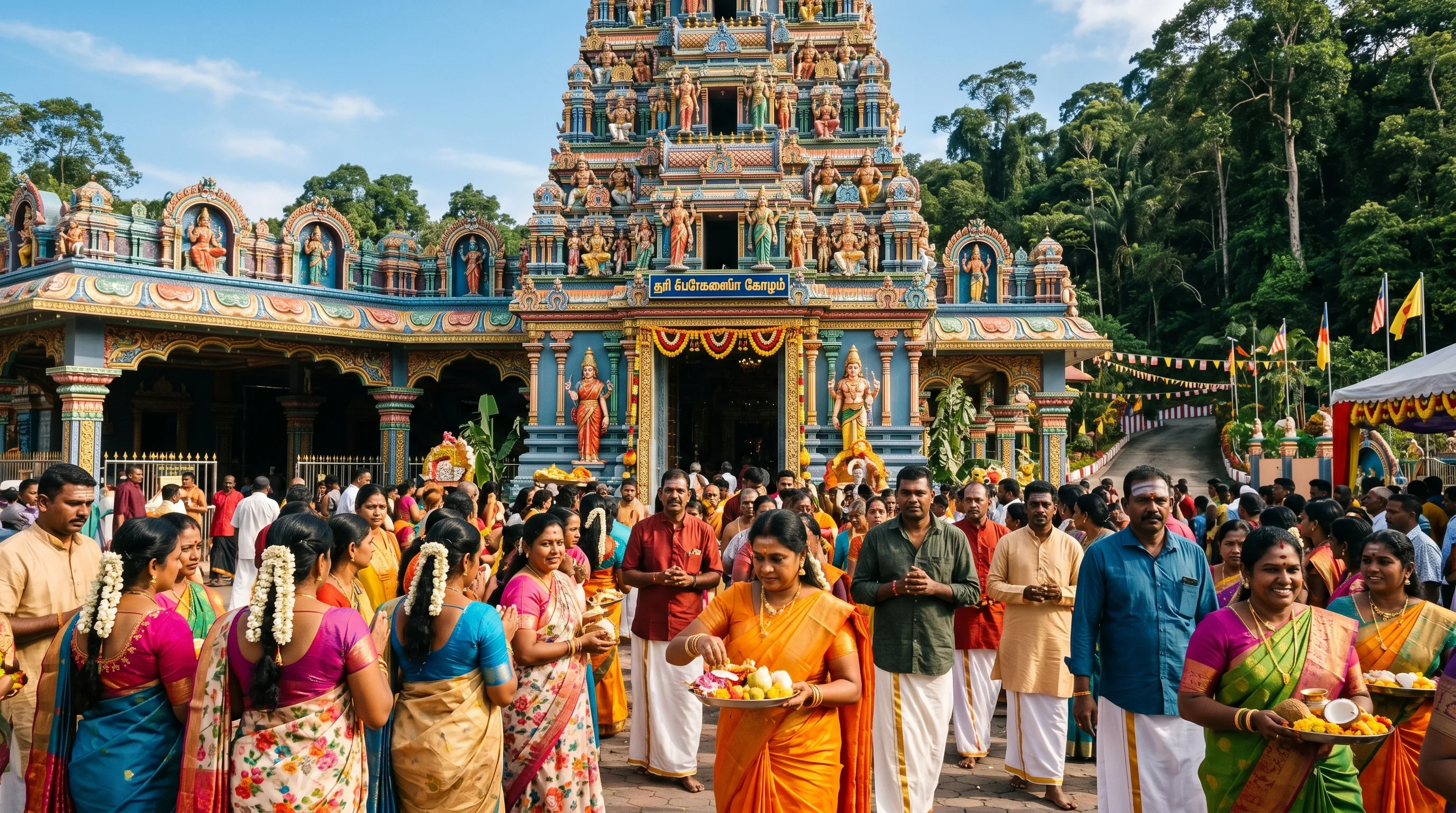
Hindu Temples of Sabah: Lok Kawi, Sandakan & Tawau
What are the main Hindu temples in Sabah?
Sabah's notable Hindu temples are Sri Subramaniya Swamy at Lok Kawi near Kota Kinabalu, Sri Sithi Vinayagar in Sandakan, and Sri Thirumurugan Alayam in Tawau. Lok Kawi hosts the state's largest Thaipusam celebration each year.
Hindu temples of Sabah at a glance
Sabah's Hindu community is small but long-established, centred on the state's Tamil population and served by temples in its three largest towns. From the Thaipusam processions at Lok Kawi to the Ganesha shrine on the Sandakan Heritage Trail and the airport-staff origins of the Tawau temple, each site tells a distinct story of faith and community.
This guide covers three temples — Sri Subramaniya Swamy at Lok Kawi near Kota Kinabalu, Sri Sithi Vinayagar in Sandakan, and Sri Thirumurugan Alayam in Tawau — along with Thaipusam, the major annual festival that brings the community, and visitors of all faiths, together.
Lok Kawi (KK): Sri Subramaniya Swamy Temple, the state's main Thaipusam centre. Sandakan: Sri Sithi Vinayagar Temple, dedicated to Vinayagar (Ganesha). Tawau: Sri Thirumurugan Alayam, established 1987, dedicated to Murugan.
Sri Subramaniya Swamy Temple, Lok Kawi
Sri Subramaniya Swamy Temple at Lok Kawi, near Kota Kinabalu, is the principal Hindu temple serving the Tamil community in Sabah. It functions as the focal point for Hindu worship in the state capital area and is best known as the centre of Sabah's Thaipusam celebration.
To accommodate its growing congregation, the temple has undergone multiple recent renovations, including permanent covered areas built to shelter the large crowds that gather for major festivals. These improvements have helped the temple keep pace with rising attendance year after year.
Thaipusam in Sabah
Thaipusam is the major annual event at Sri Subramaniya Swamy Temple, held in January or February. It has grown steadily in recent years: in 2026 the festival drew more than 1,200 attendees, up from around 800 the previous year, a clear sign of its expanding reach.
A central rite of the festival is the paal kudam, or milk-pot offering. In 2026, around 150 devotees carried milk pots as part of their devotions. Notably, Thaipusam at Lok Kawi attracts visitors of all faiths, and has come to be seen as a symbol of religious unity in Sabah.
Thaipusam falls in January or February and draws large crowds to Lok Kawi. If you plan to attend, arrive early, dress modestly, and watch the paal kudam milk-pot procession respectfully — asking before photographing any devotee or ritual in progress.
| Thaipusam at Lok Kawi | Figure |
|---|---|
| Attendees, 2026 | More than 1,200 |
| Attendees, previous year | Around 800 |
| Paal kudam devotees, 2026 | Around 150 |
| Timing | January or February |
Sri Sithi Vinayagar Temple, Sandakan
In Sandakan, the Sri Sithi Vinayagar Temple is dedicated to Vinayagar, the deity also widely known as Ganesha. As an active Hindu temple in Sabah's historic east-coast town, it serves the local Tamil and broader Hindu community.
The temple is featured on the Sandakan Heritage Trail, placing it among the town's recognised cultural landmarks. This makes it easy to visit alongside Sandakan's other heritage sites, offering a glimpse of the religious diversity that has long characterised the town.
Sri Thirumurugan Alayam, Tawau
Sri Thirumurugan Alayam in Tawau was established in 1987, founded by military personnel and airport staff based in the town. This distinctive origin reflects how Tawau's Hindu community took root and organised its first dedicated place of worship.
The temple is dedicated to Murugan, the war deity and son of Shiva, and serves the Tamil and broader Hindu communities in Tawau. As the principal Hindu temple in Sabah's southern gateway town, it completes the picture of Hindu worship spread across the state's three largest urban centres.
Temple etiquette
Hindu temples in Sabah are active places of worship and welcome respectful visitors. Dress modestly, and remove your shoes before entering the prayer areas, as is customary at Hindu temples. Keep your voice low and move calmly, especially during festivals such as Thaipusam.
Ask before photographing people at prayer or any ceremony in progress, and do not touch altars, statues or offerings unless you are invited to do so. A little courtesy ensures that worshippers and visitors of all faiths can share these spaces comfortably.