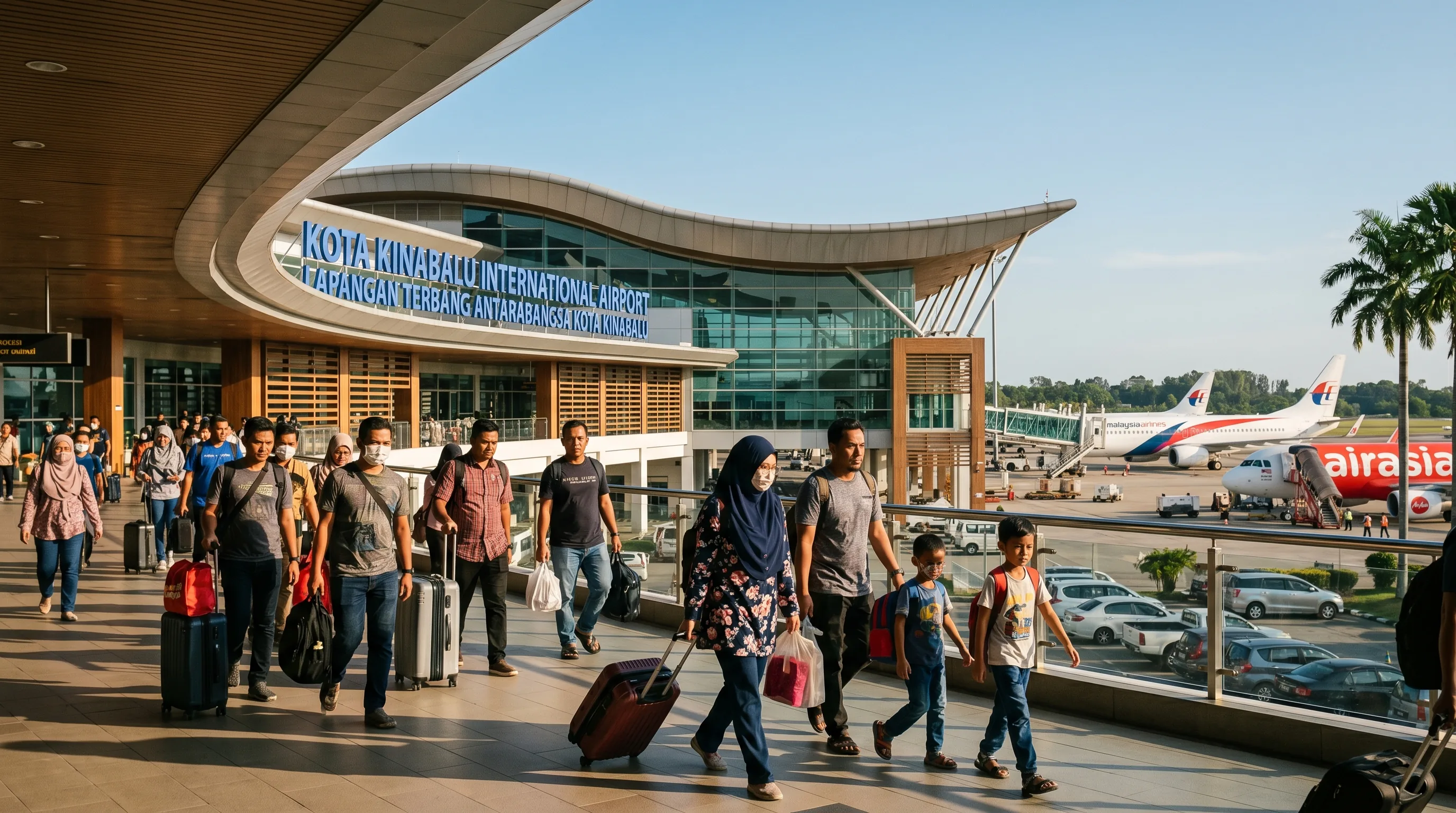
KKIA Expansion: Terminal 1 Upgrade in Kota Kinabalu
What is the KKIA expansion?
The KKIA expansion is a RM442.3 million upgrade of Terminal 1 at Kota Kinabalu International Airport. It raises annual capacity from 10 million to 12 million passengers, targeting completion in mid-2028.
What is the KKIA expansion?
The KKIA expansion is a major upgrade of Terminal 1 at Kota Kinabalu International Airport, the main air gateway into Sabah. Approved on 13 November 2024 with a project value of RM442.3 million, it is designed to give the airport room to grow as passenger numbers continue to climb.
At its core, the project tackles a simple problem: the airport is approaching the limits of what its current terminal was built to handle. By extending and modernising Terminal 1, the expansion raises annual capacity from the existing 10 million passengers to 12 million passengers per year, buying headroom for future growth in both tourism and business travel.
The works are being delivered by Malaysia Airports Holdings Berhad (MAHB), the operator of KKIA and most other major Malaysian airports, with completion targeted for mid-2028.
Current capacity and passenger numbers
To understand why the upgrade matters, it helps to look at how much traffic KKIA already carries. In 2024, the airport handled 7.95 million passengers, served by 17 airlines operating a mix of domestic and international routes.
That figure sits against a design capacity of around 10 million passengers per year. In other words, KKIA is already operating well into the upper portion of its current ceiling, leaving relatively little margin for sustained growth before facilities become strained.
With 7.95 million passengers in 2024 against a 10 million ceiling, KKIA is using roughly four-fifths of its current capacity. The expansion to 12 million is intended to keep the airport ahead of demand rather than chasing it.
Raising the ceiling to 12 million passengers a year therefore does two things: it relieves pressure on existing facilities, and it leaves room for additional flights, airlines and routes in the years ahead.
What the upgrade includes
The expansion is more than simply adding floor space. It reworks several parts of the passenger journey through Terminal 1 to handle larger volumes more smoothly.
The scope of works covers:
- An extended Terminal 1 building to add overall floor area and capacity.
- Additional gates to allow more aircraft to be served at once.
- An expanded arrivals and departures concourse to ease crowding during peak periods.
- Improved baggage handling to speed up the flow of luggage.
- Upgraded airside facilities supporting aircraft movements and ground operations.
Taken together, these elements target the parts of the airport most affected by rising passenger numbers, from the moment travellers enter the terminal to the time their bags reach the carousel. The emphasis on both landside areas, such as the concourse and baggage hall, and airside facilities, such as gates and aprons, means the upgrade addresses bottlenecks on both sides of the terminal at once.
This balanced approach matters because airport congestion rarely sits in just one place. Adding gates without expanding the concourse, or widening the concourse without improving baggage handling, would simply shift queues from one point to another. By upgrading several stages of the journey together, the project aims to deliver a smoother end-to-end experience as traffic grows.
Timeline and cost
The key figures for the project are straightforward:
| Detail | Figure |
|---|---|
| Project value | RM442.3 million |
| Approval date | 13 November 2024 |
| Current capacity | 10 million passengers/year |
| Target capacity | 12 million passengers/year |
| Target completion | Mid-2028 |
From approval in late 2024 to a mid-2028 target, the programme runs over roughly three and a half years of planning and construction. The RM442.3 million investment is focused on Terminal 1 specifically, concentrating spending where it has the most direct effect on passenger capacity and comfort.
Why KKIA matters for Sabah
KKIA is the third busiest airport in Malaysia, behind only KLIA and Penang. For Sabah, it is far more than a regional airfield: it is the primary international gateway for both tourism and business.
Sabah's economy leans heavily on visitors drawn to its islands, dive sites, mountains and rainforest, and the overwhelming majority of those travellers arrive by air through KKIA. The airport is also a vital connection for business travel, freight links and the day-to-day movement of residents to and from the rest of Malaysia and beyond.
Because so much rides on this single hub, keeping it ahead of demand is strategically important. An airport running short of capacity can become a bottleneck on the whole state's growth, limiting how many flights, airlines and visitors it can realistically accommodate.
What it means for travellers
For passengers passing through Kota Kinabalu, the expansion should translate into a smoother, less congested experience once complete.
The practical improvements travellers can expect include:
- Less crowding in the arrivals and departures concourse during busy periods.
- Faster baggage handling, reducing waiting time at carousels.
- More gates, supporting additional flights and potentially new routes.
- More headroom for airlines, which over time can mean greater choice for passengers.
With capacity lifted to 12 million passengers a year, KKIA is being positioned to comfortably absorb future growth in visitor numbers rather than straining under it, helping keep Sabah accessible as its tourism and business sectors expand.