Kota Kinabalu City Mosque — Likas Floating Mosque
What is the Kota Kinabalu City Mosque?
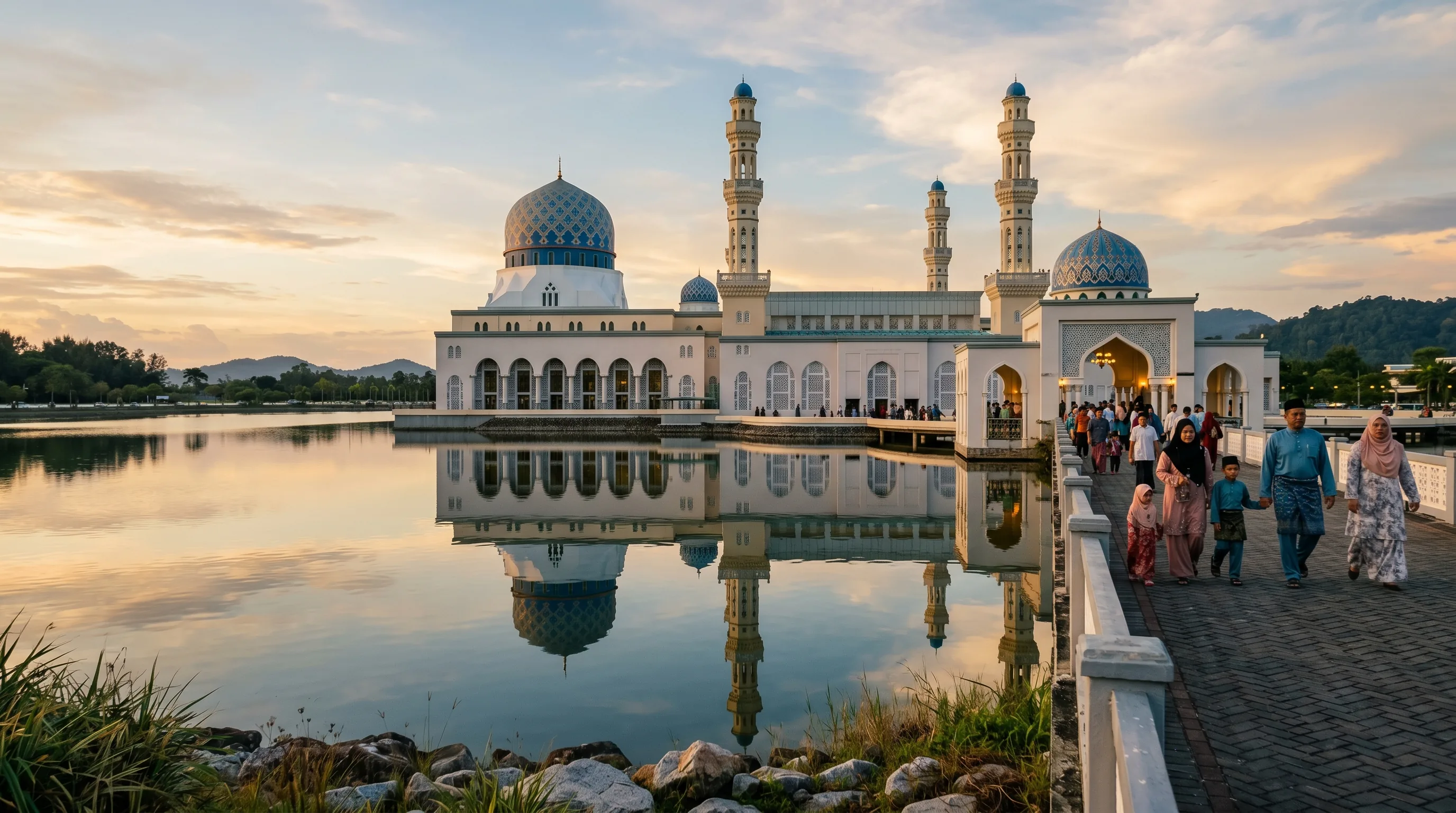
The Kota Kinabalu City Mosque, popularly called the Likas Floating Mosque or Blue Mosque, opened in 2000 on Likas Bay. Surrounded by a lagoon, it appears to float on water and seats up to 12,000 worshippers.
What is the Kota Kinabalu City Mosque?
The Kota Kinabalu City Mosque (Masjid Bandaraya Kota Kinabalu) is one of the most photographed landmarks in Sabah's capital. Standing on Pasir Road along the shore of Likas Bay, it faces the South China Sea and is better known to visitors as the Likas Floating Mosque or the Blue Mosque.
The mosque opened on 2 February 2000, a date chosen to coincide with Kota Kinabalu's official proclamation as a city. It was built as a second major mosque for the growing city, complementing the older Sabah State Mosque in Sembulan.
The site covers 14.83 acres (6.00 hectares), with roughly 70 percent of its grounds surrounded by water. This setting is what gives the mosque its signature floating appearance and makes it a fixture on Kota Kinabalu sightseeing routes.
Why is it called the Floating Mosque?
The nickname comes from the man-made lagoon that wraps around most of the building. When the water is still, the mosque and its dome are mirrored on the surface, creating the impression that the entire structure is floating.
The effect is strongest in calm conditions, particularly in the late afternoon when the low sun lights the domes and the lagoon settles. The reflection at sunset is the image most associated with the mosque.
Because about 70 percent of the 14.83-acre site is ringed by water, visitors can walk along the lagoon edge and view the mosque from several angles, all of which keep the water in the frame.
Architecture and design
The mosque's architecture draws inspiration from the Nabawi Mosque (the Prophet's Mosque) in Medina, Saudi Arabia. That influence shows in the proportions of the prayer hall and the treatment of the domes and surrounding courtyards.
The most recognisable feature is the central blue and gold dome, which reads clearly against both the daytime sky and the night lighting. Combined with the lagoon, the colour scheme is the reason the building is widely called the Blue Mosque.
| Feature | Detail |
|---|---|
| Location | Pasir Road, Likas Bay, Kota Kinabalu |
| Opened | 2 February 2000 |
| Capacity | 9,000–12,000 worshippers |
| Site area | 14.83 acres (6.00 hectares), ~70% surrounded by water |
| Design inspiration | Nabawi Mosque, Medina |
Visiting as a non-Muslim
The City Mosque is open to non-Muslim visitors on most days, with one important exception: it is closed to non-Muslims on Fridays during prayer time, when congregational Jumu'ah prayers take place.
The mosque is a popular stop and draws an estimated 700 to 1,000 visitors a day. Outside of prayer times, visitors are generally free to view the exterior, walk the lagoon walkway and, where permitted, enter the designated areas.
Dress code and etiquette
As an active place of worship, the mosque has a modest dress code that applies to all visitors:
- Cover your arms and legs. Avoid shorts, sleeveless tops and tight or revealing clothing.
- Women should wear a headscarf. Robes and scarves are available for rent at the entrance for visitors who arrive without suitable clothing.
- Remove your shoes before entering prayer areas.
- Speak quietly and behave respectfully, especially near worshippers.
- Avoid the five daily prayer times, and remember non-Muslims are not permitted during Friday prayers.
Best time to visit and photography
For photography, the late afternoon is ideal. The golden-hour light warms the domes and the calmer water produces the clearest reflection of the mosque in the lagoon.
The mosque is also striking at night, when the building is lit and the illuminated domes stand out against the dark sky and water. Many visitors photograph it from the lagoon walkway, where photography is permitted.
If your main goal is the classic floating reflection shot, aim for a calm, clear evening and position yourself along the water's edge so the lagoon fills the foreground.