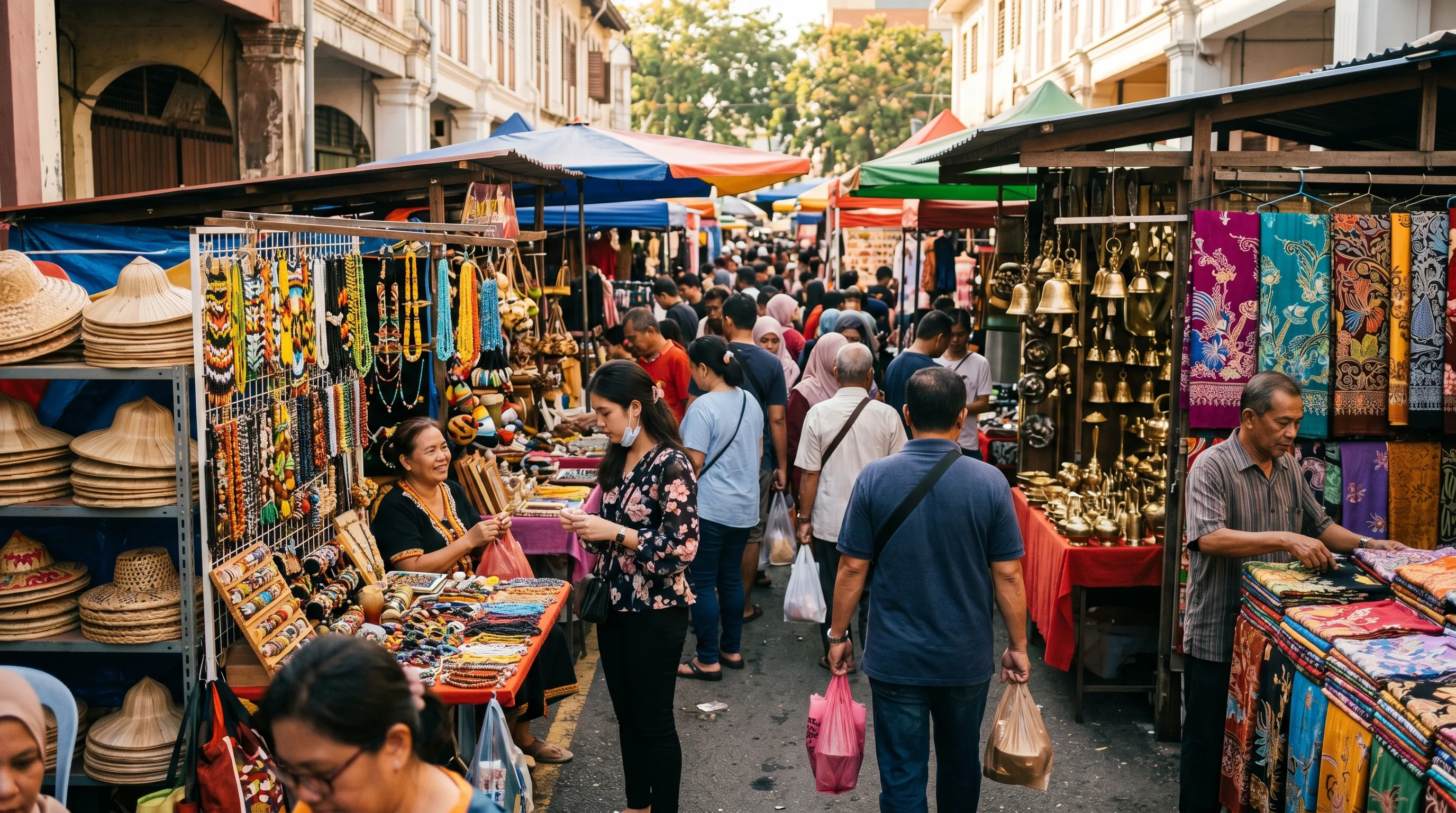
Gaya Street Sunday Market, Kota Kinabalu Guide
What is the Gaya Street Sunday Market?
The Gaya Street Sunday Market, or Pasar Minggu, is held every Sunday from 6 AM to 1 PM along Gaya Street in central Kota Kinabalu. It is the largest regular market for Sabah traditional crafts, selling beadwork, bamboo goods, brass and silver items and textiles, alongside fresh produce, street food and household goods.
What is the Gaya Street Sunday Market?
The Gaya Street Sunday Market, known locally as the Pasar Minggu, is one of Kota Kinabalu's best-loved weekly events. Held along Gaya Street in the heart of the city centre, it transforms the street into a sprawling open-air market every Sunday. For visitors and residents alike, it has become a fixture of the Kota Kinabalu weekend.
What sets the market apart is its scale and breadth. It is the largest regular market for Sabah traditional crafts, drawing together a remarkable variety of handmade and locally produced goods in one place. This concentration of craft stalls makes it the single most convenient stop for anyone wanting to see and buy Sabahan handicrafts without travelling between scattered venues.
At the same time, the market is far more than a craft bazaar. It folds in fresh produce, street food and everyday household goods, so the experience is as much about atmosphere and local life as it is about shopping. The result is a culturally immersive Sunday outing that captures something of how Kota Kinabalu lives and trades.
When and where it happens
The market keeps a simple, reliable schedule: it runs every Sunday from 6 AM to 1 PM. Because it is a morning market, the earlier hours are when the stalls are at their fullest and the atmosphere is liveliest. By early afternoon the market winds down, so timing your visit for the morning is the surest way to see it at its best.
Its location could hardly be more central. The market stretches along Gaya Street in the Kota Kinabalu city centre, putting it within easy walking distance of many of the city's hotels and landmarks. This accessibility is part of why it has remained such a popular weekly ritual for both locals and travellers.
The market opens at 6 AM and closes by 1 PM. Coming in the cooler morning hours means fuller stalls, the best selection of crafts and a more comfortable stroll along Gaya Street.
The combination of a fixed weekly slot and a central, walkable location makes the market easy to plan around. Whether you build your Sunday morning around it or simply drop in, it is one of the most straightforward cultural experiences to fit into a Kota Kinabalu itinerary.
Arts and crafts you'll find
The arts and crafts section is the market's centrepiece and the reason it is regarded as the largest regular market for Sabah traditional crafts. The range of handmade goods on offer is wide, spanning several distinct craft traditions and materials gathered into one busy stretch of street.
Among the highlights is beadwork in both Rungus and Kadazan-Dusun styles, reflecting two of Sabah's well-known beading traditions. Bamboo products such as hats and baskets sit alongside brass and silver items, including reproductions of the himpogot, the coiled brass belt associated with Kadazan-Dusun dress. Shoppers will also find batik clothing in the Malaysian style, handmade toys, ceramics, wooden carvings and souvenir textiles.
This variety means the market works well both for serious collectors of Sabahan craft and for visitors simply looking for a meaningful souvenir. Because so many craft types are represented in one location, it offers an efficient overview of the region's material culture, all available to browse and buy in a single morning.
Beyond crafts: food and goods
While crafts are the draw for many visitors, the Gaya Street Sunday Market is a full-spectrum local market. Alongside the handmade goods, stalls sell fresh produce, giving the market the feel of a genuine community gathering rather than a purely tourist-oriented attraction. This mix of buyers and sellers is part of what makes the experience feel authentic.
Street food is another major element, offering the chance to sample local flavours as you move through the crowds. Eating your way along the stalls is a natural complement to browsing the crafts, and it adds to the sense of the market as a sensory, immersive outing. Household goods round out the offering, underlining that this is a market locals genuinely use.
Because the market sells fresh produce, food and everyday goods as well as crafts, it functions as a true community event. That blend is exactly what makes a Sunday morning on Gaya Street so culturally immersive.
Taken together, these elements turn a simple shopping trip into a broader cultural experience. The market gives visitors a chance to see Kota Kinabalu at its most sociable and everyday, woven through with the colour of its craft traditions.
Tips for visiting
To get the most from the Gaya Street Sunday Market, plan your visit for the morning. With the market running from 6 AM to 1 PM, arriving early ensures you catch the full set-up of stalls, the widest choice of crafts and the most vibrant atmosphere before things begin to pack down around midday.
Because the market sits in the Kota Kinabalu city centre, it is easy to reach on foot from much of the central area, which makes it simple to combine with other activities in the city. Browsing at a relaxed pace lets you take in both the craft stalls and the surrounding produce and food sellers that give the market its character.
When shopping for crafts, the sheer variety is part of the appeal, so it can pay to walk the length of the market before committing. From Rungus and Kadazan-Dusun beadwork to bamboo, brass, batik and wooden carvings, the choice is broad, and a first pass helps you compare before you buy. Above all, treat the visit as a cultural experience rather than just a transaction, and let the immersive Sunday-morning energy of Gaya Street be part of the appeal.